Second SP

During the second standardized, I felt more comfortable in conducting the initial interview to assess for any barriers to care. However, I found that the interview may either be complicated with family members or make it easier. In my situation, the additional family member made my interview a lot easier in the sense that my patient had an altered mental status and the information can be obtained from the family member. A way in which a family member can make the interview more difficult would be that the family member may deter the NCM from conducting the interview effectively; however, its important to address all questions and issues from both the family member and the patient. Due to the fact that the family member may be the primary caretaker, all questions and concerns from them are valid and assessed as well in order to ensure that the caretaker feels comfortable in caring for the patient as one of the major caretaker issues is burnout. As the NCM, addressing this issue will only prove to better serve the patient and better promote quailty of life for both the patient and caretaker.

I feel that I still need work in reviewing the chart to better assess the situation before conducting my interview. I still need work in doing my write ups after meeting with the patient as well. I will continue to work on these two to better support and serve the patients in which I will serve in the future.
Take Aways….

This week we had a lecture on how to be professional. It is especially important in the field of healthcare when health professionals are dealing life and death decisions. Even when not dealing with life or death decision, but being in a position of higher knowledge and the ability to make a person better or not. The decisions in which we make greatly affect our patients.

It appears that professionalism is pretty much common sense; however, apparently it is not. I feel that this is mostly due to the technologically advanced world in which we currently live in. Although, the technology has advanced our lives in some aspect, it has also drew us back .

There is a lot of disconnect now between people interactions as technology, such as a cell phones, had deterred us from connecting. I feel that connecting is one of the essentials to Professionalism. Everyone communicates via email and phone nowadays and this takes away from the personalization of actually talk to someone and reading nonverbal cues. There is a lot of power in reading nonverbal cues when communicating. Nonverbal cues tells the actual feelings as opposed to what the person is saying and that is where professionalism now falls short theses days.

This semester has gone by rather quickly; however, the tools an education during this semester has been pivotal to my career goals as a future Nurse Case Manager. Of course, I am not saying that I will be perfect and understand all aspects the NCM entails but I have a better understanding and feel more prepared going in to preceptorship. I feel that my only concern is the overall process in which the initially assessment is done and how to move forward from there. I hope to find a great preceptor that is will to teach me accordingly to the areas in which I may lack knowledge.

The Importance of Home Modification

It wasn’t until after the completion of the Home Safety Self-Assessment Tool (HSSAT) on a home of a elder adult that I realized that the basic things in the home could cause an incredible strain on the health care system and the recovery a patient if an injury should occur.

The assessment allowed me to look at basic home appliances, home decor, and something that look aesthetically pleasing to the eye could be a potential hazard. Looking at the living room, the unsecured throw rugs could cause an unintended slip or fall and having item higher in the cabinet allows for additional steps to increase the chances of falling. Even with the recommended sturdy step stool to use in order to reach higher items, the risk of falling is still relatively high.

I found that the the highest and most riskiest room is the bathroom. Multiple areas in the bathroom needed modifications in order to make safe. The bathroom was a stand up shower with glass sliding windows. One would assume that due to the ability to walk right in the shower the risk for a fall is decreased; however, standing showers comes with their own risks as well. Grab bars, anti slip mat are especially needed in a standing shower.

All these modifications are especially important for patients who have already had a fall or had surgery and is in recovery in order to return back. Assessment of ADL’s will determine the amount of home modifications that is needed to aid in the recovery process.

Financial Assessment.. please help me!

Honestly, I have no idea what is covered and not covered in my health insurance. I’m sure that not many of us know this either. After review the contents of this week’s lecture, I still have a vague understanding of the financial aspect of health, what it covers and how to assess patients for any financial barriers.

Overall, I do understand the basics of asking financial questions in regards to what type of income the patient is receiving and how this impacts their ability to pay for health services and how it determines quality of to maintain health after an acute exacerbation of an illness.

Due to the sensitivity of asking a person for their financial status can be uncomfortable and perhaps rather rude situation. In order to ask about a patient’s financial status without being intrusive and overly overwhelming, perhaps presenting these questions in a non threatening and very standardized way such as one would ask every one.

During my simulation with my standardized patient, I had the opportunity to assess that rather quickly; however, my patient appeared to have been financially stable. Feedback that was received during my simulation was to not ask too many questions as financial status wasn’t pertinent to my patient. However, if the pertinent questions are not asked about financial status; how can you really assess a patient for any financial barriers. If you don’t ask, you won’t know, and people dont voluntarily tell you their financial status, so how do you ask in the most appropriate way?

Honestly, that is the question in which I hope to answer during this week’s lecture.

Newman’s Theory or Bispyschosocial Theory?

This week I had the opportunity to practice my first health assessment on a standardized patient. The experience allowed me to practice my communication and interviewing skills; however, it was very insightful in that I had the opportunity to connect with someone and find out what was going on with their health.

Although the assessment was comprised of mostly questions being asked to the patients, theses questions were meant to elicit basic information regarding the patient’s current status and how she got to the hospital. With every answer, there was an opportunity to explore on those answer to elicit more information. Sounds like interrogation or maybe manipulation but its not. 🙂

The interview was more along the lines of utilizing the Biopsychosocial model. The model presents that a person’s biological, psychological, and interpersonal aspects plays together and affects health and therefore treating only the disease will not resolve the underlying issue. So therefore, asking question regarding all aspects of the patient’s life such as living situation, mental status, and the environment allows for a bigger picture in order to assess the patient as a whole as as opposed to just focusing on the disease itself. The disease itself may be the easiest to identify; however, possible the hardest to treat if there are other barriers in managing care. I feel it is a great model for care coordination or transition of care services.

However, after completing the patient assessment to identify any barriers to health management, I feel that Newman’ theory of health would be more applicable. Newman’s theory is mostly about the nurse assisting the patient in identifying the causes of the disease, the disease process, and complication of the disease. It focuses on adjusting the consciousness to the new situation as opposed to changing or manipulating the brain that once the illness is gone, its okay to go back the same mindset that could have possibly caused the illness. I feel that it is definitely applicable in the nursing care when there is a recurring illness that may be properly managed such as asthma exacerbations. The able to about or actually identify triggers to any acute exacerbations as asthma would be most beneficial in further asthma exacerbations and therefore to decrease exacerabtions, the patient avoids those triggers.

Management of Chronic Illnesses: Family Perspective

This week I will focus on some of the barriers in which I face being a caregiver for a family member who has a chronic illness and other comorbidities.

Coming from a culture in which the concept of chronic illnesses doesn’t exist and conflicting beliefs of health care services, it is very difficult to manage, even for a person who has some knowledge of the U.S. health system. One of the major reasons for picking this career is the want to bridge this gap and to encourage awareness for a culture in which doesn’t understand what chronic illnesses is.

Caring for a family member in which has hypertension with a family history of other chronic illnesses such as Diabetes, as a nursing student, I feel that I still face many barriers in accessing care for my family member. Fortunately, one of the barriers that was discussed in class and in lecture was not one of them, living environment. However, one of the major barrier that we faced was the lack of referrals when speaking to the case manager. My family member was hospitalized and was discharged with no referral services for any follow up. I, advocating for my family member, and my knowledge had to seek out follow up services with a cardiologist, hematologist, PCP, and many more.

Another barrier in which I faced during the follow up services is the communication between all of these specialists. Medications were prescribed and the other professional would not have known this if it was not for me, as an advocate. I had to communicate for the reconciliation of medication for my own family member. Each specialist was concerned about their own treatment and it was not collaborative with my family member.

Besides all the healthcare barriers, I still face cultural barriers within the care that I provide for my family member. Medication adherence was a difficult one to overcome. All physicians emphasized the need adhere to medication; however, never asked to the reason for medication non-adherence.

These are the barriers in which I faced as a caregiver. Fortunately, with my knowledge and communication to my family member, I was able to manage this situation. However, for a person in which has no knowledge of the healthcare system, this family member would have fallen through the cracks during this process and possibly have been admitted to the hospital again.

This situation is a prime example of how the healthcare system can fail patients and the need for a good case manager to support the caregiver in the continuation of care.

Cultural Competence in Healthcare

The topic for this week was appropriate for my current status in doing the literature review for my target population, Hmong Americans, one of the major barriers in which they face in health was adjusting to the new culture.

Displaced from their homeland of Laos, the Hmong people were forced to leave their home and come to America. With no knowledge of the American lifestyle and language they faced many health disparities due to acculturation.

However, not only does this affect the Hmong people, it affects all populations. With the increase in diversity in population among the U.S., there will be a need for bridging these cultures together in order to provide good health outcomes for all.

As a healthcare provider or health service provider, being culturally competent can help bridge and decrease health disparities among the various cultures. Being culturally competent it doesn’t just mean race/ethnicity but it emcompasses health beliefs, health practices, languages, socioeconomic status, and communication.

It appear relatively easy to apply this concept; however, it can be very difficult. Due to the many various cultures, there is no way of knowing how every culture perceives health. As a health professional, being open, honest, and putting any bias aside is a good start. I feel that this will allow open communication between patient-provider relationship and foster continued services and ultimately better health outcomes.

What is a Nurse Case Manager?

There are many definitions of Nurse Case Managers according to the professional case management organizations such as the Commission for Case Management Certification (CCMC) and the American Case Management Association (ACMA); however, these professional definition often are too complex and confusing to the patient.

Essentially, the definition of the Nurse Case Manager is a registered nurse who helps the patient navigate the healthcare and community setting providing health care services in which will assist them in returning back to the lowest level of care possible, whether it be at post-acute care, a skilled nursing facility, or at home.

Seems as simple as can be but during this weeks exercise, it was harder than I thought. Even the simplest way of defining what a nurse case manager does, it still remains confusing for out patients. With that being said, I would imagine that, with the numerous amount of people walking in and out of that patients door, roles becomes forgotten or even blurred. It’s important to really listen and answer the patients questions as thoroughly as possible and follow up, follow through in order to really define your role as a case manager.

In regards to interviewing a patient as a case manager, problems that may arise would include cultural differences, language barriers, and health literacy. All of these problems will make the interview difficult that may cause minor or major impacts to their healthcare. Although being a culturally competent case manager and having an interpreter present will be beneficial, its difficult to know all cultures which in turns shows the complexity of how culture impacts health. However, being thorough in the assessment, asking the right questions, allowing sufficient time for interview, and perhaps involving a trusted family member may prove to be decrease some limitations and therefore provide better patient care services.

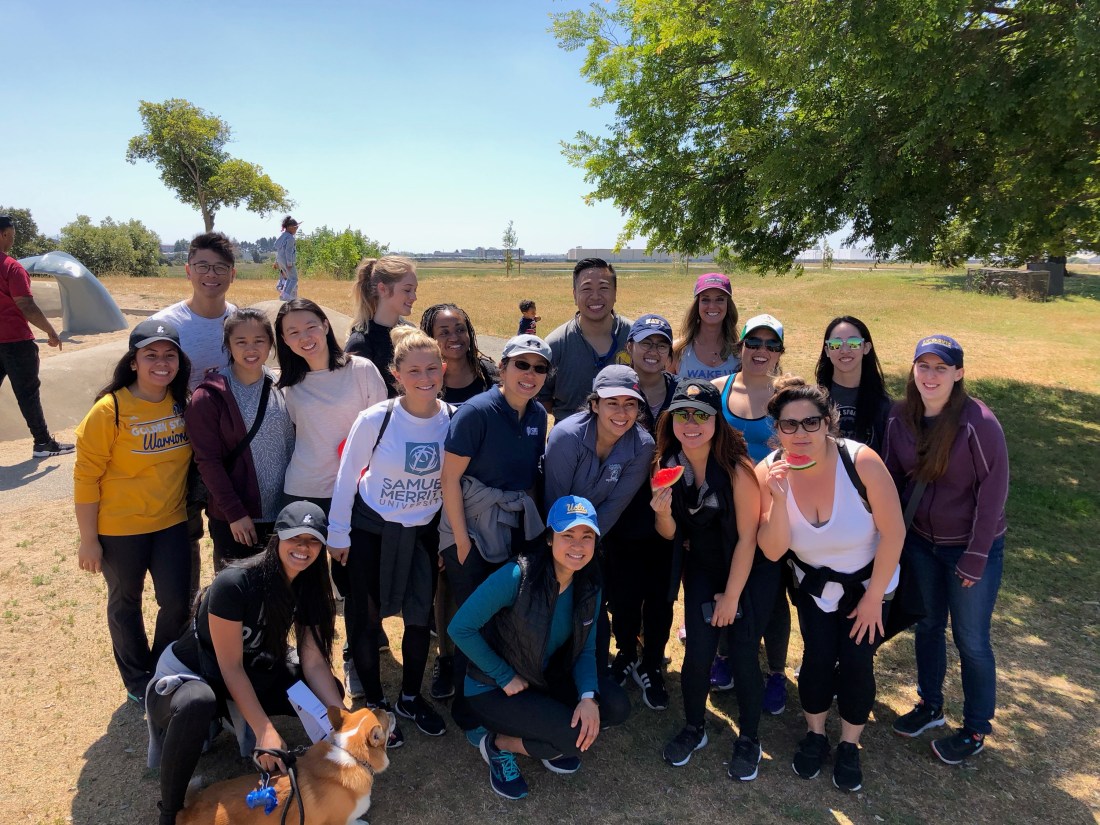
Multicultural Wellness Walk

This past weekend I had the opportunity to participate in the Multicultural Wellness Walk with my colleagues and various other participants with the goals to promote cardiovascular health, physical activity, and overall wellness. Although this walk was hosted by SMU’s Ethnic Health Institute, this walk opened for anyone who wanted to participate including our friends, family, and even a few of our furry family members who attended as well.

It is recommend that we get at least 150 minutes of physical activity each week whether it be a moderate intensity activity or walking. Although walking may not provide the most immediate or the most drastic results in improving health, it is a start considering that not everyone is at the same physical level.

It is most important to understand this and take this into consideration when assessing patients and the need to promote health. Not all patients are able mobile as some may need assistance and some may not be able to walk long distances; however, goals for health improvement will need to be individualized.

Another consideration for improving health, as studies has shown, that walking with a partner or a group will increase motivation and therefore physical activity would be beneficial when utilized as a unit.

During my walk, it did not feel like a walk as I was enjoying the weather, the company, and the talk along the way. There was no time or pace pressure, just having fun while improving my health.